Lucy Miller and Carrie Gray
(Article dated July 1995)
“The earth does not withhold, it is generous enough.”
From “A Song of the Rolling Earth” by Walt Whitman
Man’s ability to raise produce on these sandy shores is a tribute to the generosity of the earth. This island, which sprouts Poison Ivy and prickly cactus in profusion, can be tamed with some work and in the past provided most of the local families’ produce.
Mrs. Lucy Miller remembers her father’s garden at Little Kinnakeet, a village that used to be located north of Avon (Kinnakeet). This village grew around Little Kinnakeet lifesaving station. When Lucy was a child, around the year 1918, she would follow her father as he planted his seeds and would help by watering each seed from a bucket she carried using a ladle. Water was drawn from the family well. During dry spells it was tedious indeed to carry buckets of water out to the parched garden. Young Lucy’s father, John Farrow, planted sweet potatoes, cucumbers, squash, collards, and salad greens.
The seed for his garden was saved from year to year by letting the plants go to seed then collecting them once they dried and storing them in cans or jars. Mrs. Miller’s grandmother Lucinda Gray would save cucumber seeds by letting the cucumbers turn yellow on the vine, then hanging them in mesh bags until they turned soft and dripped out, leaving the seeds behind. The sandy soil was enriched with wood mold which was collected from the top layer of soil under trees where leaves had rotted over time to produce a rich compost. The garden was fertilized with fish scraps and chicken manure.
Collard seeds were planted in the very early spring on ridges. When the plants were 4 to 5 inches tall they were thinned out and spaced about 10 inches apart. Collards were grown practically the whole year, but the best crop as produced in the early winter, when a good frost makes the greens taste much better.
At that time canning was not used as a method of preservation, so much of the produce was not available in the latter part of the winter. But John Farrow had a potato house to keep his sweet potatoes in. He dug a deep hole and fixed a door on top of it. Seaweed was used to insulate each layer of sweet potatoes. He didn’t grow white potatoes but had two kinds of sweet, one variety was a cream color, the other were the yams that we are used to eating. Sweet potatoes were eaten often and prepared by frying, (sliced, lightly salted, then dipped in sugar and fried in hot oil until brown), baked, boiled, and in pies and puddings. They were sometimes put in fish stew with white potatoes and salt pork.
Farrow also had fig and peach trees and grapevines. He kept livestock and had a smokehouse. Fish was used as barter to get staples such as cornmeal, salt, and coffee. Years later when Lucy Miller married (in 1933), she lived in Kinnakeet village. Her husband Dallas had a garden and used many of his father in law’s methods. Mrs. Miller canned vegetables, pork, fish, and turtle for her family.
Mrs. Carrie Gray, another local homemaker from those days, has many memories of her husband Ellis’s garden. They married in 1931 and Mrs. Gray set up housekeeping in her husband’s hometown Kinnakeet. Ellis Gray had two large gardens and grew collards, mustard and kale greens, tomatoes, lettuce, corn, string beans, and sweet potatoes. He grew a few white potatoes but the sweet potatoes grew much easier here. Mrs. Gray remembers an 11 pound sweet potato that one of her children took to school for show and tell.
Gray used the same gardening methods that John Farrow used. Gardens were planted on ridges to lessen the chance of sound tide flooding the plants. By this time, seeds and cabbage sets could be purchased from Elizabeth City. After a few years Gray made a frame of wood covered with glass to start his own seedlings in the winter.
Garden pestshad to be removed by hand. Beetles called Sherman bugs were pulled off the plants. Mrs. Gray remembers horrible looking tomato worms that were 3 to 4 inches long and had red horns. They had to be pulled off with pliers. The children reluctantly helped weed the garden and picked blackberries.
The family had no root cellar but improvised by hanging bunches of onions in the crawl space under the house. Gray had a rack under the house to spread out the sweet potatoes. When they heard about an approaching storm in 1944 (which turned out to be a devastating hurricane) they gave away a huge pile of sweet potatoes. Their home was swept away by that storm and deposited by the tide next to the dike that surrounds the village. It was moved back and restored, but part of the house was destroyed.
Mrs. Gray preserved string beans, tomatoes, and drum fish by canning. She also made jelly and jam. She remembers having a wood stove and a kerosene stove to cook with. Some people had what was called an out kitchen for their wood stove so they could cook in summer without heating up the house. Biscuits or cornbread was baked for every meal and a typical breakfast was fried fish and biscuits with coffee. The family kept chickens and had beef occasionally. They once raised a pig but gave away all the meat after it was slaughtered because they had grown so attached to it. A lady named Rebecca Keaton (Miss Beck) kept cows and went door to door selling quarts of milk. She wore an apron that had special pockets to hold the milk bottles.
After the highway and bridge were built, islanders gradually abandoned their gardens for store bought produce. Gardening is now a hobby, not a necessity. The streets of Kinnakeet are quiet as locals have been lulled into their homes by the comforts of air conditioning and television. But some still remember those days of hard work and little money. The harsher memories of storms and swarming mosquitoes have faded, leaving behind a unique legacy to be proud of.
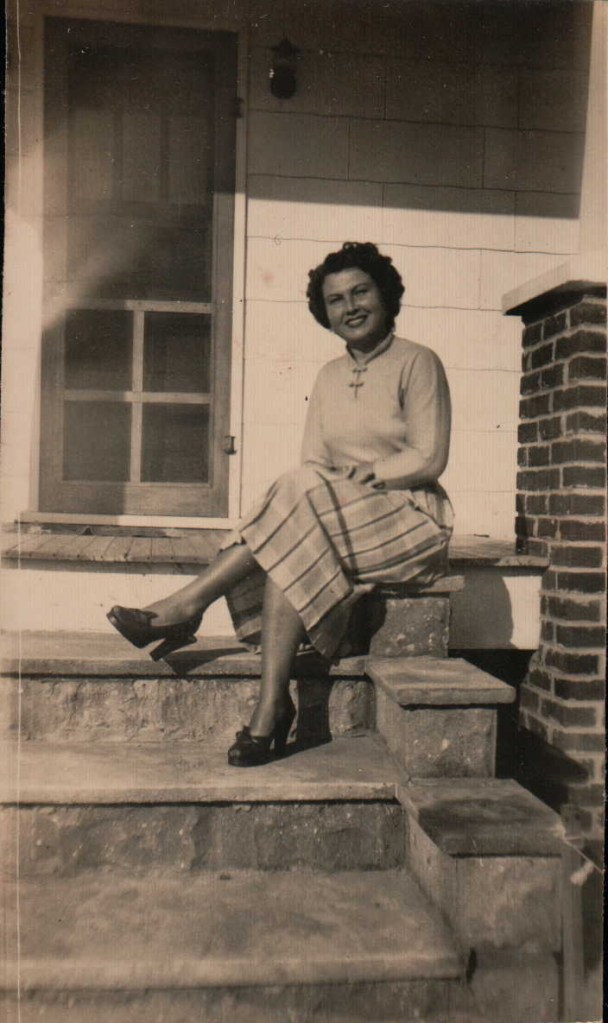
Lucy Miller in the mid 1950’s. This is the home built in 1948 by her husband, Dallas with Chauncey Meekins and Ellis Gray. In 1958 the couple moved to the home Dallas had built near the end of the Northend Road.
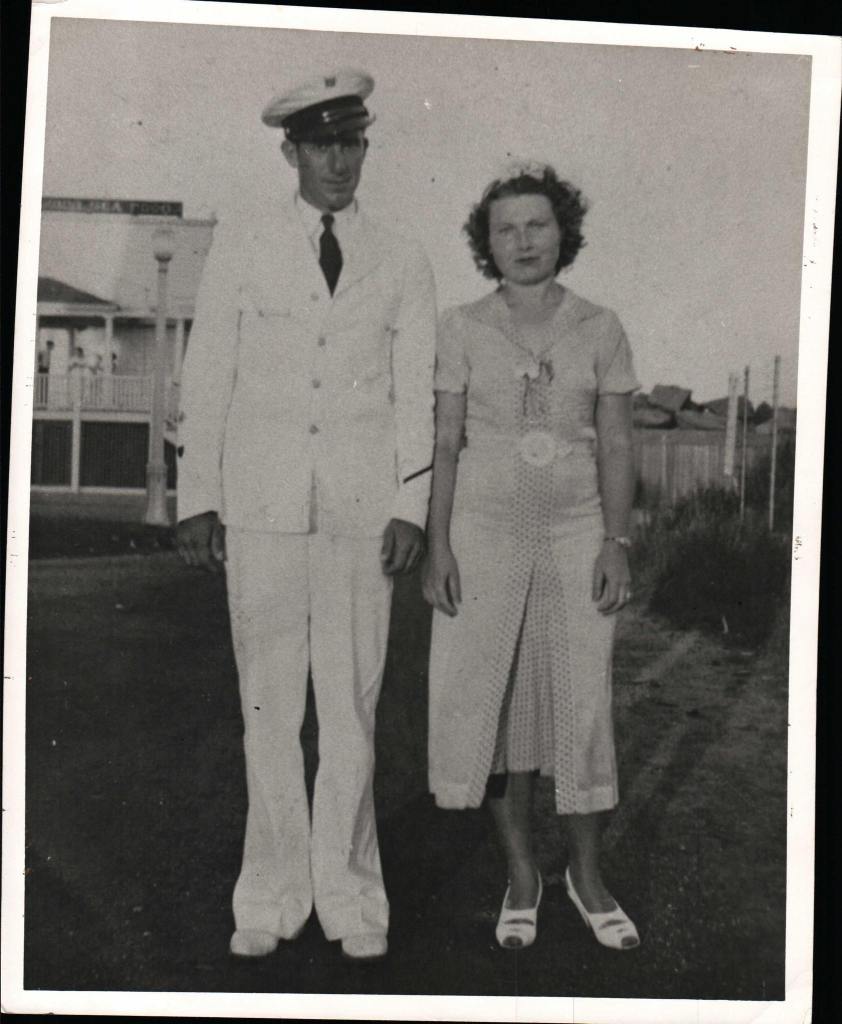
Dallas and Lucy Miller in the mid 1930’s. Photo taken in New Jersey.
 Kinnakeet Home
Hi Rhonda, I really enjoyed your article and I remember all those stories told by my mother, Carrie and my father, Ellis. However, I do want to point out though, that their last name was Gray and not Gaskins. My sister, Libby, was married to Warren Gaskins, who was from Hatteras Village and I’m sure that’s what caused the confusion! Libby was the same age as your mother, Stella.
Anyway, I do love reading your historical accounts and interviews. You are talented in being able to capture the atmosphere of those old times in your writings.
Thank you for writing about Lucy Miller and Carrie and Ellis Gray!
VR, Cheryl Gray-McDonald
LikeLike
Hi Cheryl. Thank you for catching my mistake. I have corrected it in the article. It is a little confusing. I hope to preserve a little of our shared heritage. It is such a beautiful thing! Rhonda
LikeLike
Really enjoyed reading this—-my grandparents had a wonderful garden of tomatoes and collard greens and my grandmother Mary Gray canned just about everything she could.
Thank you for this wonderful memory.
LikeLike